Side Dish: Mexico – Baja California Sur – Tortillas de Harina (Flour Tortillas)
Food safety reminder: Follow safe food-handling practices and use a food thermometer to verify safe internal cooking temperatures.
Serving Size: 12
Approximate Time
Prep
15 min
Cook
12 min
Additional
45 min
Total
1 hr 10 min
Ingredients
U.S. measurements first, metric equivalents in parentheses. Conversions are approximate; oz means weight ounces, not fluid ounces.
- 3 cups (360 g) all-purpose flour
- 6 tbsp (84 g) rendered pork lard, softened
- 1 tsp (4 g) baking powder
- 1 tsp (5 g) fine salt
- 1 cup (240 ml) + 2 tbsp (270 ml) warm water, about 100–110°F (38–43°C)
- 1/4 cup (30 g) all-purpose flour, for dusting
- 1 tbsp (14 g) melted lard or vegetable oil, for brushing (optional)
Show original ingredient measurements
- 3 cups (360 g) all-purpose flour
- 6 tbsp (84 g) rendered pork lard, softened
- 1 tsp (4 g) baking powder
- 1 tsp (5 g) fine salt
- 1 cup + 2 tbsp (270 ml) warm water, about 100–110°F (38–43°C)
- 1/4 cup (30 g) all-purpose flour, for dusting
- 1 tbsp (14 g) melted lard or vegetable oil, for brushing (optional)
Instructions
U.S. measurements first, metric equivalents in parentheses. Conversions are approximate.
Short Description:
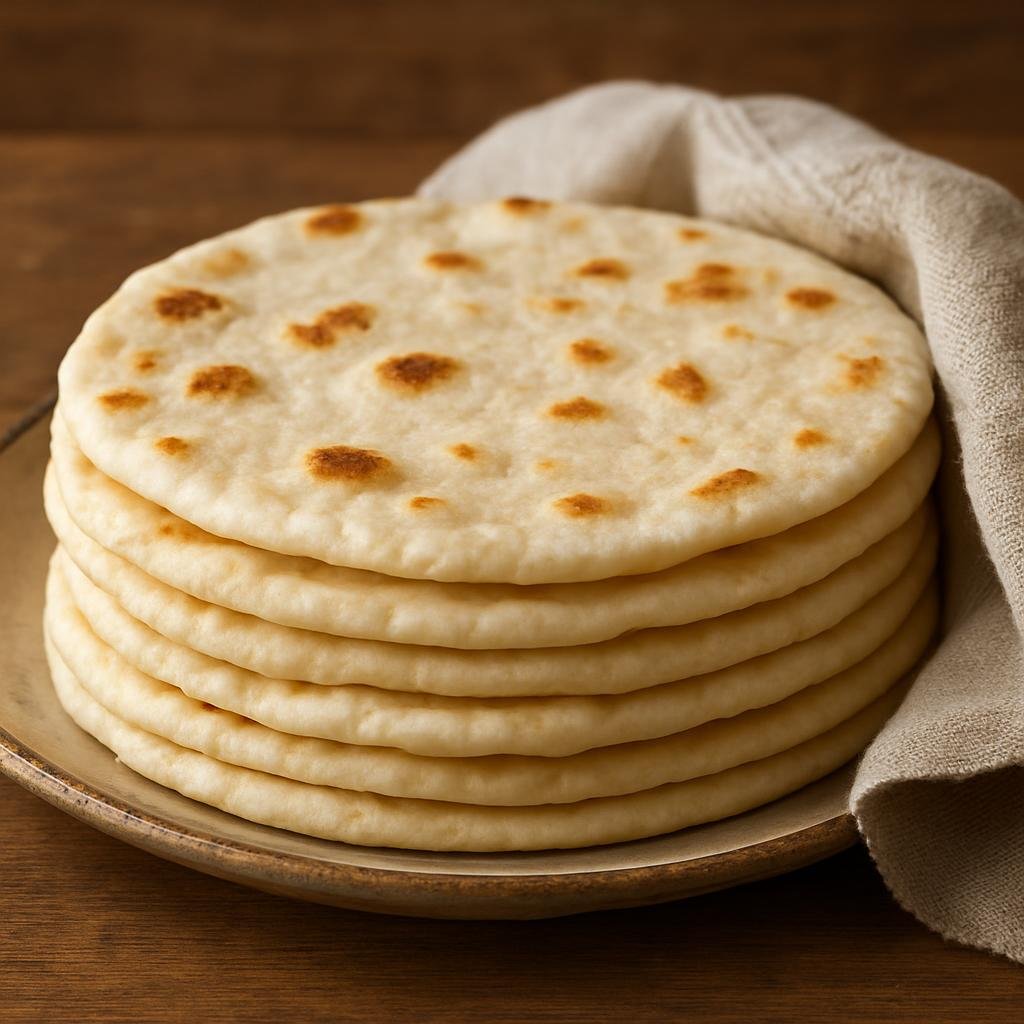
Classic Baja-style flour tortillas: slightly thicker, soft, and tender, made with lard for a rich flavor and pliable texture ideal as a side for fish tacos and other coastal dishes.

Regional Notes:
This Baja California Sur version uses rendered lard and a slightly higher fat-to-flour ratio, producing a thicker, softer tortilla than the thin city-style flour tortillas. Resting the dough and finishing the cooked tortillas stacked and wrapped helps keep them especially tender — a hallmark of the Baja peninsula preparation.

1. In a large bowl whisk together the 3 cups (360 g) flour, baking powder, and salt until evenly combined.
2. Add the 6 tbsp (84 g) softened lard and use your fingers or a pastry cutter to work it into the flour until the mixture resembles coarse crumbs with some pea-sized pieces remaining.
3. Make a well in the center and pour in about two-thirds of the warm water. Mix with a spoon, then add the remaining water gradually until a shaggy dough forms.
4. Turn the dough out onto a lightly floured surface and knead about 2–3 minutes until smooth and elastic but still soft; avoid overworking.
5. Place the dough in a lightly oiled bowl, cover with plastic wrap or a damp cloth, and let rest at room temperature for 30–60 minutes to relax the gluten and hydrate the flour.
6. Divide the dough into 12 equal pieces (about 1 3/4 to 2 1/8 oz (50–60 g) each). Roll each piece into a tight ball and cover with a cloth while you shape the rest.
7. Preheat a comal, cast-iron skillet, or heavy griddle over medium-high heat until hot and dry (a drop of water should sizzle and evaporate).
8. On a lightly floured surface (use the 1/4 cup (30 g) for dusting), press or roll each ball into a circle about 6–7 inches (15–18 cm) across and slightly thicker than thin-restaurant tortillas — roughly 0.118 to 0.157 in (3–4 mm) thick for the Baja style.
9. Place one tortilla on the hot comal and cook 40–60 seconds, until pale brown spots form and it begins to puff; flip and cook another 30–45 seconds. If it puffs fully, press gently with a spatula to encourage even contact; adjust heat as needed to prevent hard browning.
10. Transfer cooked tortillas to a towel-lined basket or plate, stack and wrap immediately to steam and stay soft. If desired, brush each warm tortilla lightly with the 1 tbsp (14 g) melted lard or oil to boost pliability and flavor.
11. Keep tortillas wrapped until ready to serve. Reheat briefly on a hot comal or wrapped in a damp towel in the microwave for 20–30 seconds to refresh softness.
Show original instructions
Short Description:
Classic Baja-style flour tortillas: slightly thicker, soft, and tender, made with lard for a rich flavor and pliable texture ideal as a side for fish tacos and other coastal dishes.

Regional Notes:
This Baja California Sur version uses rendered lard and a slightly higher fat-to-flour ratio, producing a thicker, softer tortilla than the thin city-style flour tortillas. Resting the dough and finishing the cooked tortillas stacked and wrapped helps keep them especially tender — a hallmark of the Baja peninsula preparation.

1. In a large bowl whisk together the 3 cups (360 g) flour, baking powder, and salt until evenly combined.
2. Add the 6 tbsp (84 g) softened lard and use your fingers or a pastry cutter to work it into the flour until the mixture resembles coarse crumbs with some pea-sized pieces remaining.
3. Make a well in the center and pour in about two-thirds of the warm water. Mix with a spoon, then add the remaining water gradually until a shaggy dough forms.
4. Turn the dough out onto a lightly floured surface and knead about 2–3 minutes until smooth and elastic but still soft; avoid overworking.
5. Place the dough in a lightly oiled bowl, cover with plastic wrap or a damp cloth, and let rest at room temperature for 30–60 minutes to relax the gluten and hydrate the flour.
6. Divide the dough into 12 equal pieces (about 50–60 g each). Roll each piece into a tight ball and cover with a cloth while you shape the rest.
7. Preheat a comal, cast-iron skillet, or heavy griddle over medium-high heat until hot and dry (a drop of water should sizzle and evaporate).
8. On a lightly floured surface (use the 1/4 cup / 30 g for dusting), press or roll each ball into a circle about 6–7 inches (15–18 cm) across and slightly thicker than thin-restaurant tortillas — roughly 3–4 mm thick for the Baja style.
9. Place one tortilla on the hot comal and cook 40–60 seconds, until pale brown spots form and it begins to puff; flip and cook another 30–45 seconds. If it puffs fully, press gently with a spatula to encourage even contact; adjust heat as needed to prevent hard browning.
10. Transfer cooked tortillas to a towel-lined basket or plate, stack and wrap immediately to steam and stay soft. If desired, brush each warm tortilla lightly with the 1 tbsp (14 g) melted lard or oil to boost pliability and flavor.
11. Keep tortillas wrapped until ready to serve. Reheat briefly on a hot comal or wrapped in a damp towel in the microwave for 20–30 seconds to refresh softness.
Estimated Nutritional Information*
Per serving | Servings: 12
Calories: 192 kcal
Carbohydrates: 24.9 g
Protein: 3.4 g
Fat: 8.5 g
Saturated fat: 3.3 g
Cholesterol: 8 mg
Fiber: 0.9 g
Sugar: 0.1 g
Sodium: 198 mg
Potassium: 35 mg
Calcium: 25 mg
Iron: 1.55 mg
Vitamin D: 0.2 µg
Nutrition estimated: November 5, 2026
*Values are estimates based on USDA data and mathematical calculations. Actual values may vary. Where data are unavailable, those contributions are excluded.