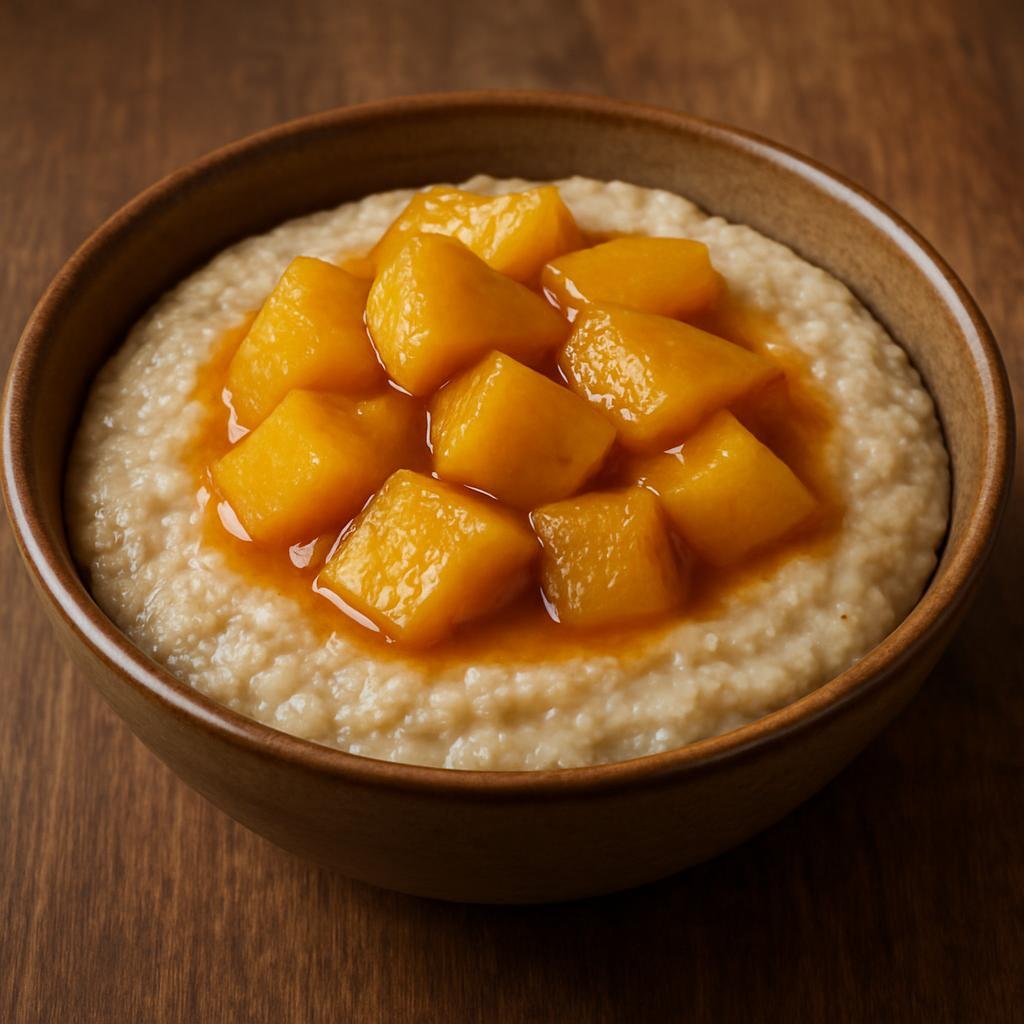
Entree: Botswana – Central Culinary Region – Bogobe jwa Lerotse (sorghum porridge with lerotse melon)
Food safety reminder: Follow safe food-handling practices and use a food thermometer to verify safe internal cooking temperatures.
Ingredients
U.S. measurements first, metric equivalents in parentheses. Conversions are approximate; oz means weight ounces, not fluid ounces.
- 2 cups (240 g) sorghum meal (coarse sorghum flour)
- 6 cups (1.4 L) water, plus extra as needed
- 1 small lerotse melon, peeled, seeded and grated, about 2 lb (900 g) (approx. 3 cups (450 g) grated)
- 1 tsp (6 g) salt
- 1 tbsp (15 g) butter or rendered beef fat (optional)
- 1 cup (240 ml) madila (fermented sour milk) or plain yogurt, for serving (optional)
- Chopped cooked spinach or a simple stew, for serving (optional)
Show original ingredient measurements
- 2 cups (240 g) sorghum meal (coarse sorghum flour)
- 6 cups (1.4 L) water, plus extra as needed
- 1 small lerotse melon, peeled, seeded and grated, about 2 lb (900 g) (approx. 3 cups/450 g grated)
- 1 tsp (6 g) salt
- 1 tbsp (15 g) butter or rendered beef fat (optional)
- 1 cup (240 ml) madila (fermented sour milk) or plain yogurt, for serving (optional)
- Chopped cooked spinach or a simple stew, for serving (optional)
Instructions
U.S. measurements first, metric equivalents in parentheses. Conversions are approximate.
1. Cook the lerotse: In a large pot, combine the grated lerotse melon and 2 cups (480 ml) water. Bring to a simmer over medium heat and cook 8–10 minutes until the melon softens and releases liquid. Mash lightly with a spoon to create an even texture.
2. Make the porridge base: In a separate bowl, whisk the 2 cups (240 g) sorghum meal with 1 cup (240 ml) cold water to form a smooth slurry (this prevents lumps).
3. Combine and stir: Pour the sorghum slurry into the simmering lerotse mixture, then add the remaining 3 cups (720 ml) water slowly while stirring continuously. Reduce heat to low.
4. Cook until thick: Stir frequently as the mixture thickens to prevent sticking. Simmer uncovered on low heat 25–35 minutes, adding small amounts of water if it becomes too stiff; the final consistency should be thick and creamy but spoonable.
5. Season and finish: Stir in 1 tsp (6 g) salt and 1 tbsp (15 g) butter or fat if using, and simmer 2–3 minutes more to meld flavors.
6. Serve traditionally: Spoon hot bogobe onto a platter or into bowls; serve with madila (1 cup (240 ml)) or plain yogurt on the side and, if desired, a cooked spinach or meat stew accompaniment. Eat by scooping portions with a wooden spoon or hands as customary.
Show original instructions
1. Cook the lerotse: In a large pot, combine the grated lerotse melon and 2 cups (480 ml) water. Bring to a simmer over medium heat and cook 8–10 minutes until the melon softens and releases liquid. Mash lightly with a spoon to create an even texture.
2. Make the porridge base: In a separate bowl, whisk the 2 cups (240 g) sorghum meal with 1 cup (240 ml) cold water to form a smooth slurry (this prevents lumps).
3. Combine and stir: Pour the sorghum slurry into the simmering lerotse mixture, then add the remaining 3 cups (720 ml) water slowly while stirring continuously. Reduce heat to low.
4. Cook until thick: Stir frequently as the mixture thickens to prevent sticking. Simmer uncovered on low heat 25–35 minutes, adding small amounts of water if it becomes too stiff; the final consistency should be thick and creamy but spoonable.
5. Season and finish: Stir in 1 tsp (6 g) salt and 1 tbsp (15 g) butter or fat if using, and simmer 2–3 minutes more to meld flavors.
6. Serve traditionally: Spoon hot bogobe onto a platter or into bowls; serve with madila (1 cup / 240 ml) or plain yogurt on the side and, if desired, a cooked spinach or meat stew accompaniment. Eat by scooping portions with a wooden spoon or hands as customary.
Per serving | Servings: 4
Nutrition estimated: November 6, 2026
*Values are estimates based on USDA data and mathematical calculations. Actual values may vary. Where data are unavailable, those contributions are excluded. Calories, Carbohydrates, Protein, Fat, Saturated fat, Cholesterol, Fiber, Sugar, Sodium, Potassium, Calcium, Iron and Vitamin A are known subtotals. Missing contributions are unknown, not zero.