Appetizer: United States – Juniper-Kissed Beet Carpaccio with Goat Cheese and Hazelnut
Food safety reminder: Follow safe food-handling practices and use a food thermometer to verify safe internal cooking temperatures.
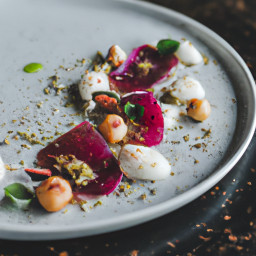
Ingredients
U.S. measurements first, metric equivalents in parentheses. Conversions are approximate; oz means weight ounces, not fluid ounces.
4 medium mixed red and golden beets
3 tbsp (45 ml) extra-virgin olive oil, divided
1 tsp (5 ml) kosher salt, plus more to taste
Freshly ground black pepper to taste
1 1 / 2 tbsp (22 ml) sherry vinegar
1 tsp (5 ml) Dijon mustard
1 tsp (5 ml) honey or maple syrup
1 / 2 tsp (2.5 ml) juniper berries, lightly crushed
1 tbsp (15 ml) finely minced shallot
1 tbsp (15 ml) fresh orange juice
1 cup (30 g) baby arugula or watercress, lightly packed
3 oz (85 g) goat cheese, crumbled
1 / 3 cup (40 g) toasted hazelnuts, roughly chopped
1 tsp (5 ml) orange zest
Show original ingredient measurements
4 medium mixed red and golden beets
3 tbsp (45 ml) extra-virgin olive oil, divided
1 tsp kosher salt, plus more to taste
Freshly ground black pepper to taste
1 1 / 2 tbsp (22 ml) sherry vinegar
1 tsp Dijon mustard
1 tsp honey or maple syrup
1 / 2 tsp juniper berries, lightly crushed
1 tbsp finely minced shallot
1 tbsp (15 ml) fresh orange juice
1 cup (30 g) baby arugula or watercress, lightly packed
3 oz / 85 g goat cheese, crumbled
1 / 3 cup (40 g) toasted hazelnuts, roughly chopped
1 tsp orange zest
Instructions
U.S. measurements first, metric equivalents in parentheses. Conversions are approximate.
Preheat the oven to 400°F (200°C). Scrub and dry the beets, drizzle with 1 tablespoon (15 ml) olive oil, season with a pinch of salt, and wrap each beet tightly in foil. Roast on a tray until fork-tender, 45–60 minutes depending on size. Let cool until handleable.
While the beets roast, toast the hazelnuts in a dry skillet over medium heat, shaking often, until fragrant and lightly browned, 3–4 minutes. Transfer to a towel, rub to remove most skins, and roughly chop.
Make the vinaigrette: In a small bowl, whisk together sherry vinegar, Dijon, honey, crushed juniper, minced shallot, and orange juice. Slowly whisk in the remaining 2 tablespoons (30 ml) olive oil until emulsified. Season with salt and black pepper to taste.
Peel the cooled beets (rubbing with a paper towel helps) and slice very thinly with a mandoline or sharp knife. Arrange the slices in overlapping circles on a chilled platter.
Toss the arugula lightly with 1–2 teaspoons (5 to 10 ml) of the vinaigrette and mound in the center of the beets.
Scatter goat cheese, toasted hazelnuts, and orange zest over the platter. Drizzle with enough vinaigrette to gloss the beets, and finish with a few grinds of black pepper and a pinch of salt.
Serve at room temperature or lightly chilled. Serves 4 as an appetizer.
Show original instructions
Preheat the oven to 400°F (200°C). Scrub and dry the beets, drizzle with 1 tablespoon olive oil, season with a pinch of salt, and wrap each beet tightly in foil. Roast on a tray until fork-tender, 45–60 minutes depending on size. Let cool until handleable.
While the beets roast, toast the hazelnuts in a dry skillet over medium heat, shaking often, until fragrant and lightly browned, 3–4 minutes. Transfer to a towel, rub to remove most skins, and roughly chop.
Make the vinaigrette: In a small bowl, whisk together sherry vinegar, Dijon, honey, crushed juniper, minced shallot, and orange juice. Slowly whisk in the remaining 2 tablespoons olive oil until emulsified. Season with salt and black pepper to taste.
Peel the cooled beets (rubbing with a paper towel helps) and slice very thinly with a mandoline or sharp knife. Arrange the slices in overlapping circles on a chilled platter.
Toss the arugula lightly with 1–2 teaspoons of the vinaigrette and mound in the center of the beets.
Scatter goat cheese, toasted hazelnuts, and orange zest over the platter. Drizzle with enough vinaigrette to gloss the beets, and finish with a few grinds of black pepper and a pinch of salt.
Serve at room temperature or lightly chilled. Serves 4 as an appetizer.
Per serving | Servings: 4
Generated: 2026-11-05T19:33:37+00:00
*Values are estimates based on USDA data and mathematical calculations. Actual values may vary. Where data are unavailable, those contributions are excluded. Calories, Carbohydrates, Protein, Fat, Saturated fat, Fiber, Sodium, Potassium, Calcium, Iron, Vitamin A and Vitamin C are known subtotals. Missing contributions are unknown, not zero.