Entree: Mauritius – Southern Culinary Region – Rougaille (Mauritian Creole tomato-based stew typically cooked with sausages, fish, or chicken)
Food safety reminder: Follow safe food-handling practices and use a food thermometer to verify safe internal cooking temperatures.
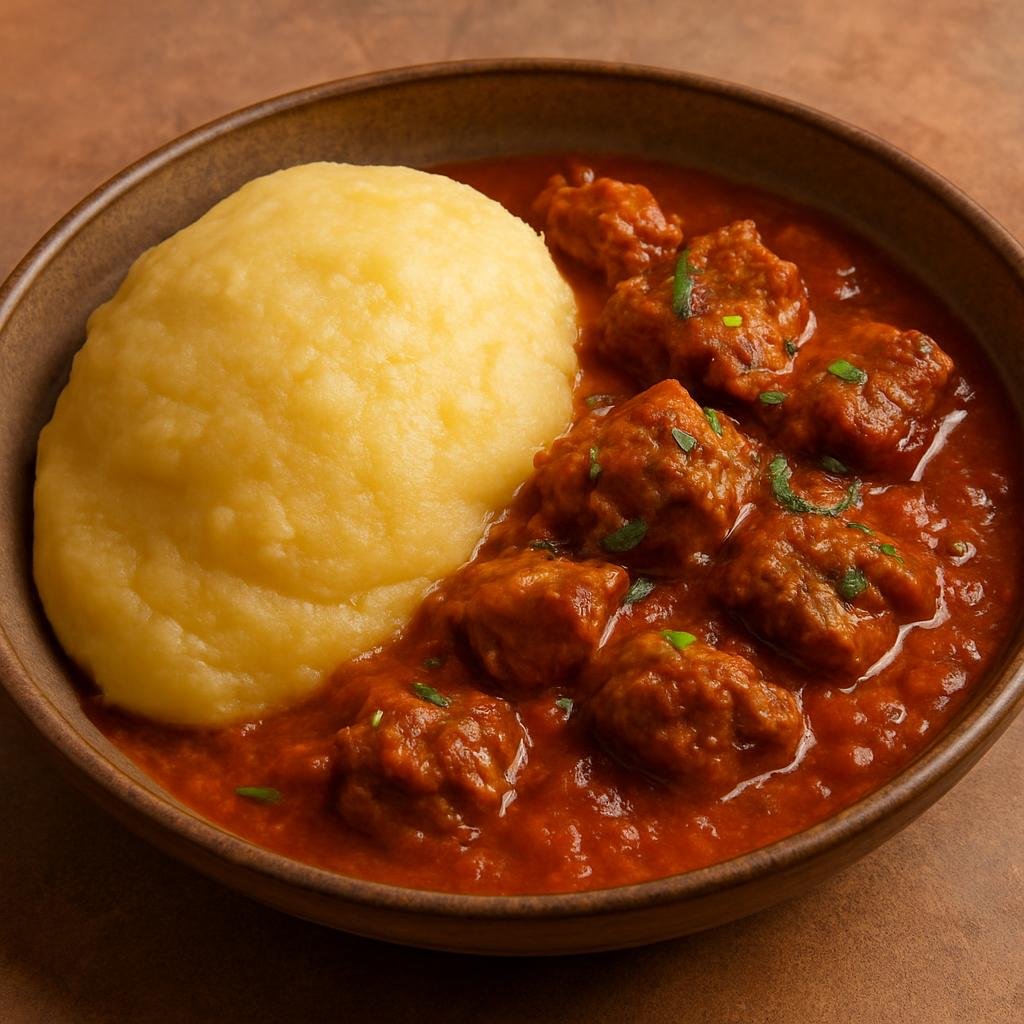
Serving Size: 4
Approximate Time
Prep
15 min
Cook
25 min
Total
40 min
Ingredients
- 2 tbsp (30 ml) vegetable oil
- 6 pork sausages, approx. 1 lb (454 g) total, sliced into 1/2-inch (1.3 cm) coins
- 1 large onion, thinly sliced
- 4 cloves garlic, minced
- 1 tbsp (15 g) fresh ginger, finely grated
- 1 medium green bell pepper, seeded and sliced
- 1 tbsp (15 ml) tomato paste
- 28 oz (800 g) ripe tomatoes, peeled and roughly chopped, or two 14 oz (400 g) cans diced tomatoes
- 2 tbsp (30 ml) white wine or 2 tbsp (30 ml) water
- 1 tsp (5 g) fresh thyme leaves or 1/2 tsp (1 g) dried thyme
- 1 small hot chili (bird’s eye or jalapeño), seeded and finely chopped, optional
- 1 tsp (5 g) sugar to balance acidity
- 1 tsp (5 g) salt, plus more to taste
- 1/2 tsp (2.5 g) freshly ground black pepper
- 2 tbsp (8 g) chopped fresh cilantro or parsley
- Steamed white rice or crusty bread for serving (no measurement required)
Instructions
1. Heat the vegetable oil in a wide skillet or sauté pan over medium-high heat. Add the sausage slices and brown them on both sides, about 5–6 minutes. Remove and set aside, leaving rendered fat in the pan.
2. Reduce heat to medium. Add the sliced onion and cook until soft and beginning to caramelize, about 6–8 minutes. Add garlic, ginger, and sliced green pepper; sauté 2–3 minutes until fragrant.
3. Stir in the tomato paste and cook 1 minute. Add the chopped tomatoes, white wine (or water), thyme, chopped chili if using, and sugar. Bring to a simmer.
4. Return the browned sausages to the pan, reduce heat to low, and simmer uncovered for 15–20 minutes until the sauce thickens and the flavors meld. Stir occasionally.
5. Season with salt and pepper, taste and adjust. Stir in chopped cilantro or parsley just before serving.
6. Serve the rougaille hot with steamed rice or crusty bread.
Estimated Nutritional Information*
Per serving | Servings: 4
Calories: 473 kcal
Carbohydrates: 19.3 g
Protein: 20.7 g
Fat: 35.6 g
Saturated fat: 9.8 g
Cholesterol: 79 mg
Fiber: 4.4 g
Sodium: 1342 mg
Potassium: 1065 mg
Calcium: 60 mg
Iron: 2.53 mg
Vitamin A: 138 µg RAE
Vitamin C: 74.8 mg
Vitamin D: 1.6 µg
Nutrition estimated: November 5, 2026
*Values are estimates based on USDA data and mathematical calculations. Actual values may vary. Where data are unavailable, those contributions are excluded. Calories, Carbohydrates, Protein, Fat, Saturated fat, Cholesterol, Fiber, Sodium, Potassium, Calcium, Iron, Vitamin A, Vitamin C and Vitamin D are known subtotals. Missing contributions are unknown, not zero.